Showing posts with label Lotus. Show all posts
Friday, October 8, 2010

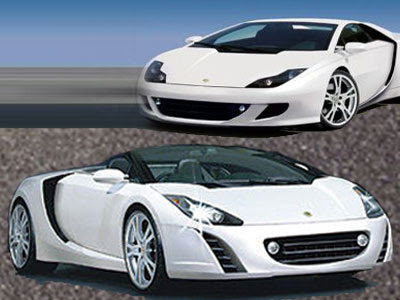
Lotus Elite on Paris Auto Show 2010

    autostream.blogspot.com

    At the stand of Paris Auto Show Lotus Elite was shown like prototype, and representatives of the company inform that the serial model will appear only four years later. Nevertheless, all basic technical characteristics are already declared. The engine will deliver Toyota. It is 5-liter V8 with a supercharger which in the base version will give out 542 h.p., and as alternative more powerful version developing 612 forces will serve. Dispersal to hundred will occupy 3,5 sec, and the maximum speed will be – 314 km/h.

    Experts in automobile history can reproach Elite like artificial Lotus. Which were always the British sport cars? First of all – in a racing way lungs. And consequently mad dynamics was reached even with not the most powerful motors. And Elite will weigh 1 650 kg.

    Company Lotus was many years in long crisis, and on one tiny sport cars business won't hoist. Classical Lotuses are calculated on the automobile gourmets which are an expert in ascetic Elise and Exige. And for elite public hardly probable not a leading role, the impressive figure in the column plays capacity.

    And the main argument which British plan to win buyers from Ferrari and Lamborghini, is the price. Ferrari California now in Europe costs about 200 000 euros. And the preliminary price for much more powerful Lotus Elite – 137 000 euros.

    lotus elite

    lotus elite on paris auto show 2010

    auto newsSource URL: https://hayleyatwellstuff.blogspot.com/search/label/Lotus
    Visit hayley atwell for Daily Updated Hairstyles Collection
Friday, October 1, 2010

Paris Auto Show: 2013 Lotus Elan【Video】


    Lotus has unveiled the 2013 Elan, The 2013 Lotus Elan will go into production in the summer of 2013 and will be put on sale in the fall the same year. The 2013 Lotus Elan is powered by a smaller engine than the previous two model. It has a 4.0 liter V6 pressure charged engine capable of delivering up to 450 PS and taking into consideration its relative light weight of 1,295kg. Planned to be produced in summer 2013, the 2013 Elan will feature a 2+2 variant and optional hybrid technology with KERS. The car will enters the market in autumn 2013 with price indication approximately £75,000.

    Also shared with the Esprit is a seven-speed dual clutch gearbox and optional kinetic energy recovery system or KERS. Peak output is rated 450 horsepower and 343 pound-feet of torque, which is significantly lower than the Esprit’s 620 horsepower and 531 pound-feet of torque, however, the Elan is not too far off the pace thanks to a lighter kerb weight of just 2,885 pounds. Lotus claims a 3.5 second time for the 0-60 mph run and a top speed around 190 mph.

    Production will start in Summer 2013 with deliveries in Autumn 2013. Expected price tag is £ 75,000 (€ 87,000).


    2013 Lotus Elan2013 Lotus Elan2013 Lotus Elan2013 Lotus Elan2013 Lotus Elan2013 Lotus Elan2013 Lotus Elan2013 Lotus Elan2013 Lotus Elan2013 Lotus Elan2013 Lotus Elan2013 Lotus Elan2013 Lotus Elan2013 Lotus Elan2013 Lotus Elan2013 Lotus Elan


    Press Release

    The End of Compromise

    As the old saying goes, you can't have your cake and eat it. In the past we were educated to believe we can't have it all. But that was the past. Today's driver demands more and the 2013 Elan delivers.

    The 2013 Elan is the beating heart of the new Lotus line-up. It's a high performance sports car, that much is clear, it's a Lotus after all, but thanks to some clever innovations the 2013 Elan also has everyday usability too.

    With a 2+2 variant, the 2013 Elan should be the only car you need.

    Set for release during the second half of 2013, the 2013 Elan features a 4.0 liter V6 pressure charged engine capable of delivering up to 450 PS and taking into consideration its relative light weight of 1,295kg, the 2013 Elan's performance edges on supercar.

    From a styling perspective, the 2013 Elan is built like an athlete with a muscular physique and perfect poise. It's a thoroughbred, rigid with tension, ambitious and addictive, nothing but best in class will suffice for this car.

    It's not enough to simply provide performance and exceptional looks, innovation is also integral to the 2013 Elan's appeal. In keeping with the rest of the new Lotus range, the 2013 Elan features optional hybrid technology with KERS.

    Dany Bahar, Chief Executive Officer of Group Lotus, said: "If there was ever a car to make you drive the long way home, it's the 2013 Elan. Perfect for both road and track, the 2013 Elan not only ticks all the boxes, it creates new ones too."

    "The 2013 Elan will convert people to Lotus, I would challenge people not to become addicted to driving it. It will also go a long way towards dispelling the old misconceptions about this class, that in order to have high performance you must sacrifice usability - those days are gone."

    "Once you drive an 2013 Elan you won't look back, it will give you things you didn't even realise you were missing - that's the essence of Lotus and the 2013 Elan perfectly captures that spirit."

    One car, zero compromise.

    2013 Lotus Elan Specifications

    • Layout 2 seater (optional 2+2), mid-engined, rear wheel drive
    • Engine Petrol, hybrid optional
    • Hybrid technology Optional KERS
    • Cylinder V6
    • Capacity 4.0 litre
    • Power/Torque 450 PS / 465 Nm
    • Rev limit 7,800 rpm
    • 0-100 km/h 3.5 seconds
    • Top speed 310 km/h
    • CO2 approx (CO2/km) 199 g/km**
    • Weight 1,295 kg
    • Seats 2
    • Transmission 7 Speed DCT
    • Drive RWD
    • Start of production Summer 2013
    • Enters the market Autumn 2013
    • Price indication Circa £75,000

    *Please refer to the ‘Further Information' section in the Media Kit for information relating to this specification
    **Using optional hybrid


    Source URL: https://hayleyatwellstuff.blogspot.com/search/label/Lotus
    Visit hayley atwell for Daily Updated Hairstyles Collection
Tuesday, September 21, 2010

Lotus has presented a supercabriolet Elite

    autostream.blogspot.com

    Model Elite which Lotus will show in one and a half week on the Parisian showroom, is allocated first of all with the powerful motor, throwing down a challenge to such super cars , as Ferrari and Lamborghini. The novelty will receive 5-liter V8 with a supercharger which in the base version will give out 542 h.p and as alternative more powerful version developing 612 h.p will serve. Well and as to weight of a body – anything outstanding. The model will weigh 1 650 kg. For comparison: Lotus Elise – less than ton.

    While British speak about the novelty in the future time as start in manufacture is planned only in 2014. And looking now at pictures of a pre-series prototype, it is possible even not to guess that this model – a cabriolet with a rigid developing roof. That is, the nearest competitor – Ferrari California which, by the way, concedes to a Lotus on capacity. At its order only 460 h.p.

    All testifies that before us not the concept car, and model really ready to manufacture. So, for example, representatives Lotus inform all details of technical characteristics (dispersal to hundred – 3,5 sec, the maximum speed – 314 km/h). And even the price – from 137 000 euros is declared. For Ferrari California now in Europe ask much more – about 200 000 euros.

    autostream.blogspot.com

    autostream.blogspot.comSource URL: https://hayleyatwellstuff.blogspot.com/search/label/Lotus
    Visit hayley atwell for Daily Updated Hairstyles Collection
Friday, August 27, 2010

Lotus Evora Cup GT4 Debuts this weekend


    After unveiling the Evora S and Evora IPS, Lotus has now put the spotlight on the Evora GT4, the racing version of the car, which is set for debut at this weekend (28th-29th August 2010) Nurburgring European GT4 Championships race. Lotus Motorsport has entered the Lotus Evora Cup/GT4 in the “Invitation” category in the hands of Lotus rookie driver Ollie Hancock.

    With 355 bhp and weighing in at just 1190 kg, nearly 200 kg less than the road going Evora, the new Evora GT4 carries the Lotus Type Number 124 and represents part of Lotus’ new strategic GT motorsport programme, further details of which will be announced at the Paris Motor Show on the 30th of September 2010.

    Next to the Evora Cup, Lotus will also be bringing four ultra lightweight Lotus 2-Eleven GT4 race cars to the event. Two of these sports cars will be decked out in the Lotus Motorsport livery with members of NFS Racing Dubai. The other two Lotus Evoras will be operated by Team Scuderia Giudici, who currently lead the GT4 “Super Sports” Championship category.


    Lotus Evora Cup Car GT4 Lotus Evora Cup Car GT4


    Press Release

    Five of the best


    New Lotus Evora Cup/GT4 race car and four Lotus 2-Eleven GT4 race cars take on the Nürburgring.
    The new Lotus Evora Cup/GT4 makes its racing debut this weekend (28th-29th August 2010) in the hands of Lotus rookie driver Ollie Hancock.

    Lotus Motorsport has entered the Lotus Evora Cup/GT4 in the "Invitation" category of the European GT4 Championships as part of a year long development programme prior to a full GT4 championship assault in 2011. The GT4 will also be made available as a customer race car to privateer racing teams.

    With 360 PS and weighing in at just 1190 kg, nearly 200 kg less than the road going Evora, the new Evora GT4 carries the Lotus Type Number 124 and represents part of Lotus' new strategic GT motorsport programme, further details of which will be announced at the Paris Motor Show on the 30th of September 2010.

    Liveried in striking Lotus Motorsport Green with a yellow twin-stripe running down the centre, the Lotus EvoraCup/GT4 brings the iconic colour scheme back once again to sports car racing.
    The Evora Cup/GT4 will debut just a matter of hours after Lotus announced the new 350 PS, supercharged Evora S road car, to be unveiled at the Paris Motor Show.

    Already, the Lotus Evora Cup/GT4 has undergone a punishing and extensive development programme with Lotus Racing's F1 driver Jarno Trulli, experienced GT racer Johnny Mowlem and Lotus Motorsport's own Product Manager Gavan Kershaw as part of the development team.

    Lotus Motorsport's IndyCar driver Takuma Sato and 1996 Champ Car winner, Jimmy Vasser have also given extensive feedback having driven the Evora Cup/GT4 at the legendary Laguna Seca race circuit in early August, giving Lotus' newest race car a most diverse and comprehensive pedigree.

    Accompanying the Evora's debut will be four ultra lightweight Lotus 2-Eleven GT4 race cars, two of which will be entered in the Lotus Motorsport colour scheme and run by NFS Racing Dubai. The other two cars will be run by Team Scuderia Giudici, who currently lead the GT4 "Super Sports" Championship category.

    For those who can't make the journey to the Nürburgring in the beautiful Eifel region to see the Evora Cup/GT4 making its first racing appearance, then GT racing fans will have an opportunity to see a second Evora Cup/GT4 in the slightly less hilly surroundings of Norfolk where Lotus Motorsport's Product Manager Gavan Kershaw will be giving demonstration laps during the Snetterton round of the British GT4 Championships also over the weekend of the 28th and 29th of August.

    Source URL: https://hayleyatwellstuff.blogspot.com/search/label/Lotus
    Visit hayley atwell for Daily Updated Hairstyles Collection

Paris Preview: 2011 Lotus Evora S and Evora IPS automatic


    After Lotus’ recent e-mail malfunction, they have now officially unveiled details of both models. These are the Lotus Evora S and the Evora Intelligent Precision Shift (IPS), which will officially make its debut at the Paris Motor Show.

    The Evora S has a 3.5-liter V6 engine that makes 345 horsepower and 295 pound-feet of torque. That compares with the standard Evora's 276 hp and 252 lb-ft. The Evora S also gets a retuned suspension for a more "instinctual" performance feel, Lotus says. Brakes are cross-drilled for better cooling, and there's a new active exhaust with a "dramatic" sound. A standard sport pack lets the driver control throttle response, change the dynamic stability control settings and activate the exhaust bypass, all by using a Sport button.

    The Lotus Evora now comes with an IPS (Intelligent Precision Shift) option, which is a 6-speed automatic gearbox that is mated to the 3.5L V6 making 276-hp. 0-60 mph with the IPS option on the Lotus Evora comes in 5.3 seconds with a top speed of 155 mph. Evora’s with the IPS option will allow drivers to switch between manual paddle shift and automatic drive modes. A ‘sport’ mode is also available and allows the driver to feel each gear shift and be in complete control of the transmission.

    Lotus has dubbed the automatic-equipped version the Evora IPS, for Intelligent Precision Shift. It’s equipped with a six-speed automatic transmission with automatic, sport, and full-manual modes, the latter involving wheel-mounted shift paddles. With a projected weight of 3166 pounds, Lotus says the Evora IPS will hit 60 mph in 5.3 seconds and manage a top speed of 155 mph.

    But that's not the only thing Lotus revealed today: also coming to Paris is a new Intelligent Precision Shift option for the standard Evora. The IPS is a six-speed automatic transmission with manual paddle-shift mode. That's all we know for now. The rest of the details will have to wait for Paris.

    Source: Lotus


    Lotus Evora S Lotus Evora S Lotus Evora S Lotus Evora S


    Press Release

    It's an Evora but not as you know it

    Ahead of the official unveil at the Paris Motor Show on September 30th, Lotus announce the latest evolution of the award winning Evora - the Evora S and Evora IPS (Intelligent Precision Shift) option.

    Lotus has taken the award winning* Evora and re-created it with a 350 PS 3.5l V6 engine to create the Evora S. Dany Bahar Lotus' Chief Executive Officer summed it up beautifully when he said: "You don't realise what you were missing from your driving experience until you get behind the wheel of the Evora S."

    So apart from the obvious power difference, how is the Evora S different to the standard Evora? It's another question we put to the CEO (given that he's spent a little time behind the wheel, we thought he'd be best placed to answer questions). This is what he said: "It's the next level of Evora experience. It communicates with you better, the suspension setting has been fine tuned for added power and control so it responds even more to direction. It's an instinctual car, the experience is pure."

    "We were proud of the Evora but we're even prouder of the Evora S, I feel like it does the true Lotus experience justice. The really great thing is that as we move forward the standard Evora should also benefit from some of these developments."

    The Evora S comes with a sport pack as standard featuring a ‘sport' button which allows the driver to control throttle response and activate the exhaust by-pass valve. The sport button also raises the instantaneous rev limit and changes the dynamic stability control settings resulting in a total experience change. There are cross-drilled brakes for improved cooling. And here's a heads up for those who buy into the old adage ‘you can tell the men from the boys by the size of their toys': the external emotion of the Evora S has been improved with a completely new active exhaust which means that at the push of a button the car sounds just as dramatic as it feels.

    Commenting on the Evora S, Lotus Chief Commercial Officer Andreas Prillmann said: "The Evora S is a natural progression for us but more than that, it's a taste of what people can come to expect from the next generation of Lotus cars. It retains core Lotus values such as performance through lightweight but it also gives more than that. It's the perfect combination of top performance, style and comfort. Form doesn't sacrifice function in the case of the Evora S."

    So there you have it folks, the next generation of Lotus Evora, the Evora S, set to be unveiled at the Paris Motor Show.

    But that's not all. In addition to the Evora S, Lotus also presents the IPS (Intelligent Precision Shift) option. This inception of the seven-time-award-winning (who's counting? We are!) Evora sees an automatic 6-speed gearbox with Lotus developed transmission control with a 3.5 l V6 engine delivering 280 PS assuring a superior automatic driving experience.

    The IPS version of the Evora allows the driver to switch between manual paddle shift and automatic drive modes. The driver also has the option of selecting ‘sport' mode which showcases the Lotus sport driving experience allowing the driver to really feel each gear shift and be in complete control of the transmission.

    Commenting on the development Dany Bahar said: "The Evora IPS is set to broaden the appeal of the Evora and reach out to a slightly different market. We hope it will be popular with established automatic locations such as Asia, the Middle East and the US. It's been a long time since Lotus created an automatic and we've spent a great deal of time refining this one to make sure that it perfectly complements the Evora drive experience."


    Evora S Technical Specification
    Model Evora S
    Engine - Mid mounted, transverse 3.5 litre DOHC V6 VVT-I
    Emissions see below due to wheel options
    Transmission - 6 speed manual
    Chassis - Modular lightweight bonded aluminium structure
    Steering - Lotus tuned hydraulically-assisted power steering
    Suspension - Forged aluminium double wishbone suspension
    Bilstein high performance gas dampers
    Eibach coaxial coil springs


    Performance data
    Standard wheel option
    Fuel consumption - urban 14.5 l/100km
    Fuel consumption - extra urban 7.4 l/100km
    Fuel consumption - combined 10.0l/100km
    CO2 Emissions 235 g/km

    19/20" wheel option
    Fuel consumption - urban 14.6 I/100km
    Fuel consumption - extra urban 7.6 I/100km
    Fuel consumption - combined 10.2 I/100km
    CO2 Emissions 239 g/km

    Max power - 350 PS / 257.5 kW @ 7000 rpm
    Max torque - 400 Nm / 295 lb ft @ 4500 rpm
    0-60 mph - 4.6s
    0-100 km/h 4.8s
    Maximum speed - 172mph
    Vehicle mass (unladen) - 1437kg


    Evora IPS Option Technical Specification
    Engine - Mid mounted, transverse 3.5 litre DOHC V6 VVT-I
    Emissions - 208 g/km
    Transmission Electronically controlled 6 speed automatic
    Chassis Modular lightweight bonded aluminium structure
    Steering Lotus tuned hydraulically-assisted power steering
    Suspension Forged aluminium double wishbone suspension
    Bilstein high performance gas dampers
    Eibach coaxial coil springs


    Performance data
    Fuel consumption - urban 12.6 l/100km
    Fuel consumption - extra urban 6.6 l/100km
    Fuel consumption - combined 8.8 l/100km
    CO2 Emissions 208 g/km


    Max power - 280 PS / 206 KW @ 6400rpm
    Max torque - 350 Nm / 258 lb ft @ 4700rpm
    0-60 mph - 5.3s
    0-100 km/h - 5.5s
    Maximum speed - 155mph
    Vehicle mass (unladen) - 1436 kg


    Source URL: https://hayleyatwellstuff.blogspot.com/search/label/Lotus
    Visit hayley atwell for Daily Updated Hairstyles Collection

Tuesday, August 10, 2010

New Opel will name Allegra

    Opel Allegra

    The French edition L Automobile Magazine assures that new small Opel which will appear in the market in the near future, will be called Allegra. This car begins to compete in the market not only to Fiat 500, but even with double Smart.

    It is expected that Opel Allegra sales will begin already in the beginning of 2012. This car will have at length about 3 meters, but thus in interior four persons can take place at once. Thus the car should become rather safe, and every possible updates like climate control or a glass roof here will be present too.

    Base versions of Opel Allegra will receive petrol and diesel motors with two cylinders. But thus Germans work over electric version Allegra which can be recharged from the usual electric socket connection.Source URL: https://hayleyatwellstuff.blogspot.com/search/label/Lotus
    Visit hayley atwell for Daily Updated Hairstyles Collection
Monday, June 21, 2010

Special Edition Lotus Elise SC RGB and Exige S RGB [Video]


    Lotus is launching two special-edition cars in honor of vehicle engineering director Roger Becker, who retired from Lotus in January. Becker joined Lotus in 1966 and helped develop every new Lotus since, including the Esprit, Elan, and Evora.

    The Elise SC RGB (for Roger G. Becker) features ultra-lightweight forged alloy wheels, sport and touring packages, air conditioning, monochrome Lotus badges, an individually numbered plaque, and Roger Becker's signature on B-pillar. It is powered by a 217 hp (220 PS / 162 kW) supercharged 1.8-liter engine, which allows the car to accelerate from 0-60 mph in 4.3 seconds (0-100 km/h in 4.6 seconds).

    The Elise SC RGB Special Edition is powered by a supercharged 1.8 liter engine that develops a total of 217 hp and rockets the car from 0 to 60 mph in 4.3 seconds. The Lotus Exige S RGB Special Edition gets a supercharged and intercooled 1.8 liter engine with 257 HP and a sprint time of 4 seconds.

    Body colours available for the Lotus Elise SC RGB and the Lotus Exige S RGB are Aspen White, Starlight Black, Solar Yellow and Carbon Grey and each exemplar will also feature a numbered plaque with Roger Becker's signature.

    The cars will go on sale in September, the Elise SC RGB will be priced from £38,550 (€43,655) while the Exige S RGB starts at £41,950 (€50,042).


    Lotus Exige S RGB Special Edition Lotus Exige S RGB Special Edition


    Press Release

    Roger Becker, former Director of Vehicle Engineering for Lotus is celebrated with a series of special edition versions of the final run of European specification 1.8 litre Elise and Exige sportscars.

    In celebration of his now legendary input over the years, Roger Becker (RGB) who retired in January following 44 years of service, will have a series of Lotus Elise and Lotus Exige sports cars in bespoke RGB Special Edition specification produced and set for release from September 2010.

    The Elise SC and Exige S RGB Special Editions will both be specified to a high level with Sports and Touring packs as standard. The Elise SC RGB Special Edition has a supercharged 217 hp (220 ps) 1.8 litre engine which blesses it with a 0-60 mph time of 4.3 seconds (0-100kmh in 4.6 seconds). The Lotus Exige S RGB Special Edition uses the range topping 257 (260 ps) supercharged and intercooled 1.8 litre engine which endows it with a 0-60 mph in around 4 seconds and a phenomenal aerodynamic downforce figure of 92.5 lbs (42 kg) at 100 mph (160 kmh).

    Roger Becker said, "I am honoured that Lotus has named these two special editions after me, especially as it allows me to offer the customer my favourite specifications. The past 44 years have been an incredible journey and I'm looking forward to watching Lotus progress in the future, I have no doubt that the company will continue to go from strength to strength."

    Both the Elise SC and the Exige S RGB Special Editions are available in four colours, Aspen White, Starlight Black, Solar Yellow & Carbon Grey and each one is identified by a numbered interior plaque, Roger Becker's signature on the side of the bodywork and special monochrome Lotus nose badge.

    At the end of 2010, production of the European versions of the Elise R and SC and the Exige S and Cup 260, which use the 1.8 litre 2ZZ VVTL-i engines supplied by Toyota, will finish due to changes in legislation and the introduction of "Euro 5" Type Approval which does not apply to these cars. Production of the Elise R and SC and the Exige S and Cup 260 will, however, continue for all other markets.

    Andreas Prillmann, Chief Commercial Officer for Lotus Cars said, "I would like to thank Roger for his dedication to Lotus It's fitting that an exclusive number of the last of the 1.8 litre Elises and Exiges for Europe are dedicated to Roger, who has been instrumental in the development of so many Lotus cars over the years, in particularly the Evora, the Exige and the recent versions of the Elise. Not only has his extensive knowledge and learning been passed on to our team of talented and skilled engineers, but also his passion for the Lotus brand and heritage has helped Lotus grow into the world class organisation that it is today."

    The new, super efficient 2011 Model Year Lotus Elise, introduced to the market earlier this year, will continue for all markets where it is sold including Europe.

    The Lotus Elise SC RGB Special Edition in more detail:

    • 217 hp (220 ps) supercharged 1.8 litre engine
    • Lotus ultra lightweight forged alloy wheels
    • Sport pack
    • Touring pack
    • Four paint colours - Aspen White, Starlight Black, Solar Yellow & Carbon Grey
    • Roger Becker signature on rear of the car
    • Roger Becker numbered plaque
    • Monochrome Lotus badges
    • Air conditioning
    • Recommended Retail Price:
      • UK: £38,550 (including VAT)
      • Euro Zone: € 43,655 (excluding regional taxes)
      • Switzerland: CHF 71,435 (excluding taxes)

    Official European Combined Cycle = 8.5 litres / 100 km (33.2 mpg)
    Official European Extra Urban Cycle = 6.4 litres/100 km (44.1 mpg)
    Official European Urban Cycle = 11.8 litre/100 km (23.9 mpg)
    199 g/km of CO2

    The Lotus Exige S RGB Special Edition in more detail:

    • Standard Features
    • 257 hp (260 ps) Supercharged 2ZZ 1.8 engine
    • Lotus ultra lightweight forged alloy wheels
    • Performance pack
    • Sport pack
    • Touring pack
    • Four paint colours - Aspen White, Starlight Black, Solar Yellow & Carbon Grey
    • Roger Becker signature on rear of car
    • Roger Becker numbered plaque
    • Monochrome Lotus badges
    • Structural shear panel which gives increases lateral stiffness to the rear subframe by 30%
    • Air conditioning
    • Recommended Retail Price:
      • UK: £41,950 (including VAT)
      • Euro Zone: € 50,042 (excluding regional taxes)
      • Switzerland: CHF 81,887 (excluding taxes)

    Official European Combined Cycle = 8.5 litres / 100 km (33.2 mpg)
    Official European Extra Urban Cycle = 6.5 litres/100 km (43.5 mpg)
    Official European Urban Cycle = 11.9 litre/100 km (23.7 mpg)
    199 g/km of CO2

    Press release announcing Roger Becker’s retiremen:

    Roger Becker Lotus' Director of Vehicle Engineering is retiring from Group Lotus after a long career of 44 years.

    Roger, 64, joined Lotus in 1966, working on the Elan assembly line at Cheshunt, but his natural driving and engineering skills came to the attention of Lotus founder Colin Chapman and Roger was quickly moved to the vehicle development team where he worked directly with Mike Kimberley (former Lotus CEO) on the Lotus Europa Twin Cam - his first Lotus car development project.

    During his career at Lotus, Roger has been responsible for the development of every Lotus car, including the legendary Esprit, Excel, Elan, Elise, Exige and the new critically acclaimed Lotus Evora. Roger has helped to maintain the philosophies laid down by Colin Chapman and has ensured that the essence and purity of Lotus is instilled in all new Lotus cars. He also has imparted his chassis engineering knowledge and development skills to many of the world's major automotive manufacturers in support of Lotus' consultancy engineering business.

    On his retirement, Roger Becker said, "I have had a dream career at Lotus, with the honour of not only working directly for Colin Chapman but also working with some of the finest people in the motor industry. With the Lotus Evora successfully entering the market with unprecedented global adulation, and at 64 years of age, I feel now is the natural time to retire. The Evora has given me my finest hour at Lotus and I leave knowing it will be the foundation of all our next generation cars. The product engineering team will build on this to develop many more award-winning products and I wish them every success for what promises to be a very exciting future for Lotus cars and the Lotus brand."

    Dany Bahar, CEO of Group Lotus plc said, "On behalf of all the staff at Lotus, I would like to thank Roger for his contribution to Lotus over 44 years and we wish him well in his retirement."


    Source URL: https://hayleyatwellstuff.blogspot.com/search/label/Lotus
    Visit hayley atwell for Daily Updated Hairstyles Collection

Monday, June 14, 2010

Hennessey Venom GT - Pictures and Video

    Showcasing cool pictures of the Hennessey Venom GT sports car. The basic ingredients of this cool car are one flyweight mid-engine Lotus Elise, which normally has a 190bhp Toyota engine, mix with equal parts tuned LS9; stretch, poke, and slam, and what do you have? A 2,400lb mid-engined carbon-fibre rocketship with a 725bhp V8 as the base engine. Let me reiterate: a Lotus Elise with 725bhp.

    Hennessey Venom GT Road Test Video 


    Hennessey Venom GT Pictures 

     
    Source URL: https://hayleyatwellstuff.blogspot.com/search/label/Lotus
    Visit hayley atwell for Daily Updated Hairstyles Collection
Wednesday, April 28, 2010

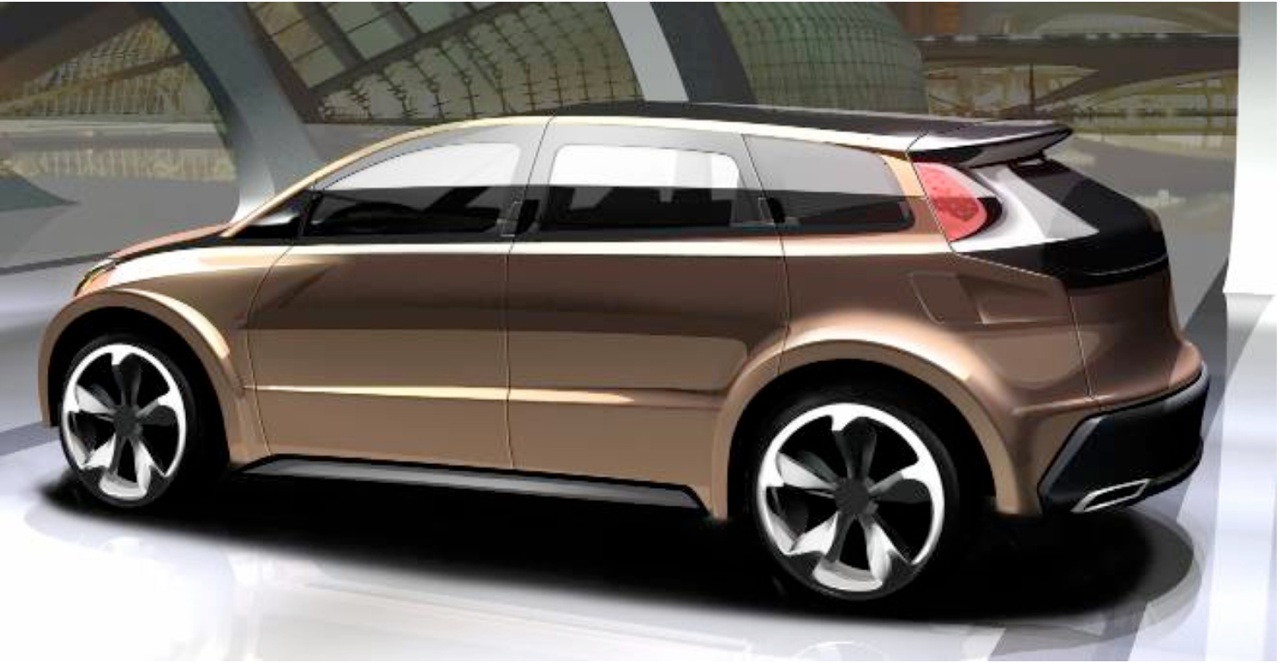
Lotus Engineering demonstrates the lightweight future of the passenger car


    Lotus Engineering conducted two studies to look at the possibility of developing passenger vehicles from 2017. The specialised lightweight sports car maker says its long-time philosophy of weight reduction will benefit potential customers in the areas of fuel consumption and C02 emissions.

    company engineers discovered that by improving the aerodynamics by 80 counts, the car netted a six mile per gallon improvement in its highway fuel economy rating (note: a "count" is a thousandth of a point of a Cd number, so reducing a Cd of 0.150 by 50 counts would give you a Cd of 0.100). On the flipside, taking out 400 pounds of stuff only improved the car's highway mpg by one mile a gallon, though that's largely because of the Newtonian "an object in motion tends to stay in motion unless acted upon by an outside force" hubbub.

    The interior systems include 50% lighter seats, climate control hardware, navigation electronics and others. There is a high level of component integration for space maximisation and weight minimisation. An example is the audio/ air conditioning/navigation touch screen which also contains the shifter and parking brake functions. Chassis and suspension components are to be downsized, the glazing and width of the windscreen possibly reduced and replaced with an appropriate, lower weight substitute.


    Press Release
    • Study by Lotus Engineering concludes that a vehicle mass improvement
      of 38% versus a conventional mainstream vehicle can be achieved at only
      3% cost.
    • Efficient design and lightweight materials significantly reduce CO2
      emissions.

    Lotus Engineering has conducted a study to develop a commercially viable
    mass reduction strategy for mainstream passenger vehicles. This study,
    released by the International Council on Clean Transportation, focused on
    the use of lightweight materials and efficient design and demonstrated
    substantial mass savings. When compared with a benchmark Toyota Venza
    crossover utility vehicle, a 38% reduction in vehicle mass, excluding
    powertrain, can be achieved for only a 3% increase in component costs using
    engineering techniques and technologies viable for mainstream production
    programmes by 2020. The 2020 vehicle architecture utilises a mix of stronger
    and lighter weight materials, a high degree of component integration and
    advanced joining and assembly methodologies.

    Based on U.S. Department of Energy estimates, a total vehicle mass
    reduction of 33% including powertrain, as demonstrated on the 2020 passenger
    car model, results in a 23% reduction in fuel consumption. This study
    highlights how automotive manufacturers can adopt the Lotus philosophy of
    performance through light weight.

    Dr Robert Hentschel, Director of Lotus Engineering said: "Lighter
    vehicles are cleaner and more efficient. That philosophy has always been
    core to Lotus' approach to vehicle engineering and is now more relevant than
    ever. Lightweight Architectures and Efficient Performance are just two of
    our core competencies and we are delighted to have completed this study with
    input from the National Highway Traffic Safety Administration and the U.S.
    Environmental Protection Agency to provide direction for future CO2
    reductions. We believe that this approach will be commonplace in the
    industry for the future design of vehicles."

    The study investigated scenarios for two distinct vehicle architectures
    appropriate for production in 2017 and 2020. The near-term scenario is based
    on applying industry leading mass reducing technologies, improved materials
    and component integration and would be assembled using existing facilities.
    The mass reduction for this nearer term vehicle, excluding powertrain, is
    21% with an estimated cost saving of 2%.

    A benchmark Toyota Venza was disassembled, analysed and weighed to
    develop a bill of materials and understand component masses. In developing
    the two low mass concepts, Lotus Engineering employed a total vehicle mass
    reduction strategy utilising efficient design, component integration,
    materials selection, manufacturing and assembly. All key interior and
    exterior dimensions and volumes were retained for both models and the
    vehicles were packaged to accommodate key safety and structural dimensional
    and quality targets. The new vehicles retain the vision, sight line, comfort
    and occupant package of the benchmarked Toyota Venza.

    Darren Somerset, Chief Executive Officer of Lotus Engineering
    Incorporated, Lotus' North American engineering division which led the
    study, said "A highly efficient total vehicle system level architecture was
    achieved by developing well integrated sub-systems and components,
    innovative use of materials and process and the application of advanced
    analytical techniques. Lotus Engineering is at the forefront of the
    automotive industry's drive for the reduction in CO2 and other greenhouse
    gas emissions and this study showcases Lotus Engineering's expertise and
    outlines a clear roadmap to cost effective mass efficient vehicle
    technologies."

    Mass and Cost Summary


    Base
    Toyota Venza

    excluding powertrain


    Lotus Engineering Design


    System


    Weight


    (kg)


    2020
    Venza


    2017
    Venza


    %
    Mass Reduction


    %
    Cost Factor


    %
    Mass Reduction


    %
    Cost Factor


    Body


    383


    42%


    135%


    15%


    98%


    Closures/Fenders


    143


    41%


    76%


    25%


    102%


    Bumpers


    18.0


    11%


    103%


    11%


    103%


    Thermal


    9.25


    0%


    100%


    0%


    100%


    Electrical


    23.6


    36%


    96%


    29%


    95%


    Interior


    252


    39%


    96%


    27%


    97%


    Lighting


    9.90


    0%


    100%


    0%


    100%


    Suspension/Chassis


    379


    43%


    95%


    26%


    100%


    Glazing


    43.7


    0%


    100%


    0%


    100%


    Misc.


    30.1


    24%


    99%


    24%


    99%


    Totals


    1290


    38%


    103%


    21%


    98%


    The full report, entitled ‘An Assessment of Mass Reduction Opportunities for
    a 2017 - 2020 Model Year Vehicle Program' can be found at the following
    link:

    http://www.theicct.org/documents/0000/1430/Mass_reduction_final_2010.pdf

    ENDS

    The 2020 Passenger Car Technical Detail

    Body

    The body includes the floor and underbody, dash panel assembly, front
    structure, body sides and roof assembly. The baseline Toyota Venza
    body-in-white contained over 400 parts and the revised 2020 model reduced
    that part count to 211. The body-in-white materials used in the baseline
    Venza were 100% steel, while the 2020 model used 37% aluminium, 30%
    magnesium, 21% composites and 7% high strength steel. This reduces the
    structure mass by 42% from 382 kg to 221 kg.

    The low mass 2020 body-in-white would be constructed using a low energy
    joining process proven on high speed trains; this process is already used on
    some low volume automotive applications. This low energy, low heat friction
    stir welding process would be used in combination with adhesive bonding, a
    technique already proven on Lotus production sports cars. In this instance,
    the robotically controlled welding and adhesive bonding process would be
    combined with programmable robotic fixturing, a versatile process which can
    be used to construct small and large vehicles using the same equipment.

    Closures/Fenders

    The closures include all hinged exterior elements, for example, the front
    and rear doors and the rear liftgate. One alternative approach included
    fixing the primary boot section to improve the structure, reduce masses and
    limit exposure to high voltage systems. A lightweight access door was
    provided for checking and replacing fluids.

    The closures on the baseline Toyota Venza were made up of 100% steel. The
    low mass Venza closures/fenders would be made up of 33% magnesium, 21%
    plastic, 18% steel, 6% aluminium with the other 22% consisting of multiple
    materials. The mass savings are 41%, a reduction from 143 kg to 84 kg.

    Interior

    The interior systems consist of the instrument panel, seats, soft and
    hard trim, carpeting, climate control hardware, audio, navigation and
    communication electronics, vehicle control elements and restraint systems.
    There is a high level of component integration and electronic interfaces
    replace mechanical controls on the low mass model. For the 2020 model the
    instrument panel is eliminated replaced by driver and passenger side modules
    containing all key functional and safety hardware. A low mass trim panel
    made from a high quality aerated plastic closes out the two modules. The air
    conditioning module is incorporated into the console eliminating the need
    for close out trim panels; heated and cooled cupholders are integrated into
    the HVA/C module. The audio/HVA/C/Navigation touch screen contains the
    shifter and parking brake functions and interfaces with small electric
    solenoids. This eliminates conventional steel parking brake and shifter
    controls and cables as well as freeing up interior space.

    The front seats mount to the structural sill and tunnel structure
    eliminating conventional seat mounting brackets (10 kg) and the need to
    locally reinforce the floorpan. The composite front seat structure utilises
    proven foam technology; the seat mass is reduced by up to 50%. The rear seat
    support structure is moulded into the composite floorpan eliminating the
    need for a separate steel support structure. The front and rear seats use a
    knit to shape fabric that eliminates material scrap and offers customers the
    opportunity to order their favourite patterns for their new vehicle. Four
    removable carpet modules replace the traditional full floor carpeting; this
    reduces mass and allows cost effective upgrading of the carpet quality. The
    floorpan is grained in all visible areas. The 2017 production interior mass
    was reduced from 250 kg to 182 kg with projected cost savings of 3%. The
    2020 production interior mass was 153 kg with projected cost savings of 4%.

    Chassis/Suspension

    The chassis and suspension system was composed of suspension support
    cradles, control links, springs, shock absorbers, bushings, stabilizer bars
    and links, steering knuckles, brakes, steering gearbox, bearings, hydraulic
    systems, wheels, tires, jack and steering column.

    The chassis and suspension components were downsized based on the revised
    vehicle curb weight, maintaining the baseline carrying capacity and
    incorporating the mass of the hybrid drive system.

    The total vehicle curb weight reduction for the 2020 vehicle was 38%,
    excluding the powertrain. Based on the gross vehicle weight, which includes
    retaining the baseline cargo capacity of 549 kg and utilising a hybrid
    powertrain, the chassis and the suspension components were reduced in mass
    by 43%, with projected cost savings of 5%.

    Front and Rear Bumpers

    The materials used on the front and rear bumpers were very similar to the
    existing model to maintain the current level of performance. One change was
    to replace the front steel beam with an aluminium beam which reduced mass by
    11%. The use of a magnesium beam was analysed but at the current time
    exceeded the allowable price factor.

    Heating, Ventilation and Air Conditioning

    The air conditioning system was integrated into a passenger compartment
    system and an engine compartment system. This section addressed the under
    hood components which included the compressor, condenser and related
    plumbing. The under hood components were investigated for technologies and
    mass.

    The study showed a relatively small mass difference for the underhood air
    conditioning components based on both vehicle mass and interior volume.
    Because of the highly evolved nature of these components, the requirements
    for equivalent air conditioning performance and the lack of a clear
    consensus for a future automotive refrigerant, the mass and cost of the
    Toyota Venza compressor, condenser and associated plumbing were left
    unchanged for both the 2017 and 2020 models.

    Glazing

    The glazing of the baseline vehicle was classified into two groups: fixed
    and moving. The fixed glass is bonded into position using industry standard
    adhesives and was classified into two sub groups: wiped and non wiped.

    Factors involved in making decisions about glazing materials include the
    level of abrasion it is likely to see during the vehicle life, the
    legislative requirements for light transmissibility, the legislative
    requirements for passenger retention and the contribution it will make to
    interior noise abatement.

    The specific gravity of glass is 2.6 and the thickness of a windshield is
    usually between 4.5 mm and 5 mm, therefore the mass per square metre of 5 mm
    glass is approximately 13 kgs. The high mass of glass provides a strong
    incentive to reduce the glazed area of the body, reduce the thickness of the
    glass and find a suitable substitute that is lighter. Fixed glass on the
    side of the vehicle offers the best opportunity for mass reduction.

    The mass of the baseline glazing was retained for both the 2017 and 2020
    models; this was a conservative approach. It is possible that coated
    polycarbonate materials may become mainstream in the 2017 - 2020 timeframe
    for fixed applications.

    Electrical/Lighting

    The estimated mass savings for using thinwall cladding and copper clad
    aluminium wiring, as used on the 2017 model was 36% versus the baseline
    model. The lighting technologies section reviewed included diodes, xenon and
    halogen. The study also reviewed a variety of wireless technologies under
    development for non-transportation applications that could be used in this
    time period pending successful development for mobile applications.


    Source URL: https://hayleyatwellstuff.blogspot.com/search/label/Lotus
    Visit hayley atwell for Daily Updated Hairstyles Collection
Sunday, April 25, 2010

2011 Lotus Elise Specifications, Features, Stills

    Lotus reveals the details of their 2011 Lotus Elise that comes featured with new body design with improved aerodynamic features, New integrated headlamps with LED daytime running lights.The new 2011 Lotus Elise will be available in two models: Lotus Elise and Lotus Elise SC.

    Standard Features comes with 2011 Lotus Elise consists of leather-trimmed Momo steering wheel, cast alloy 8-spoke wheels, standard 4-wheel disc brakes and anti-lock braking system (ABS), black cloth seats with anatomical padding providing great comfort for driver and aerodynamic rear diffuser with central twin exhausts.

    The 2011 model optional availabilities includes Options include traction control, limited-slip differential, hardtop, forged alloy wheels for better performance and Touring or Sport packs.The 2011 Lotus Elise packs a 16-inches front wheels and 17-inches rear wheels.

    2011 Lotus Elise Engine:

    The 2011 Lotus Elise also comes packed with the same engine of the current model ie the toyota built 1.8-liter, mid-mounted, 4-cylinder engine.The base model of Lotus Elise provides 189 horsepower at 7800 rpm and 188 lb.-ft. of torque at 6800 rpm.The Elise SC—supercharged model has a maximum 218 horsepower at 8000 rpm and 156 lb.-ft. of torque at 5000 rpm.The engine is mated with a 6-speed manual transmission.

    2011 Lotus Elise Top Speed and 0-60mph:

    The 2011 Lotus Elise model takes about 4.9 seconds to hit 60mph mark from 0 and for the Elise SC model its been reduced to 4.0 seconds.The top speed of 2011 Lotus Elise is about 150 mph.

    2011 Lotus Elise Fuel Economy (mileage)
    • Lotus Elise - 21 mpg during city ride and 27 mpg in highway
    • Lotus Elise SC - city 20 mpg and highway 26 mpg
    2011 Lotus Elise Safety
    Both the up coming models of Lotus Elise are provided with standard dual driver and front passenger air bags, anti-theft alarm with engine immobilizer, and remote start.The is the inclusion of tire-pressure-monitoring system and track-tuned ABS as additional safety measures.The 2011 Lotus Elise models lacks front side and curtain air bags while traction control is an optional availability.

    Tags:-2011 Lotus Elise details, 2011 Lotus Elise specs, 2011 Lotus Elise features, 2011 Lotus Elise tires, 2011 Lotus Elise mileage, 2011 Lotus Elise fuel efficiency, 2011 Lotus Elise top speed, 2011 Lotus Elise engine specs, 2011 Lotus Elise images, 2011 Lotus Elise stills, 2011 Lotus Elise wallpapers, 2011 Lotus Elise options, 2011 Lotus Elise new features.Source URL: https://hayleyatwellstuff.blogspot.com/search/label/Lotus
    Visit hayley atwell for Daily Updated Hairstyles Collection
Monday, April 12, 2010

Lotus Elise Prices

    The base prices since January 2008 for the three European models; the 134 bhp (100 kW; 136 PS) Elise S, 189 bhp (141 kW; 192 PS) Elise R and 218 bhp (163 kW; 221 PS) Elise SC were 23,550; 28,550 and 32,550 GBP respectively.The MSRP for American Elise models are $47,250 for the base model and $54,990 for the Elise SC, which are the only two models currently available in the US market as of 2009.Source URL: https://hayleyatwellstuff.blogspot.com/search/label/Lotus
    Visit hayley atwell for Daily Updated Hairstyles Collection
Monday, March 22, 2010

2011 Lotus Esprit Sports Car Gallery

    2011 Lotus Esprit Sports Car Gallery2011 Lotus Esprit Sports Car

    The guys over at AutoCar have caught the upcoming Lotus Esprit testing in cold-snowy weather of Sweden. After running some DVLA records and matching the license plate, AutoCar has learned that the prototype is powered by a 4.4 liter V8 engine. Lotus sources have previously said that BMW may be the supplier for Lotus’ 2011 Esprit.It’s possible that the new Lotus Esprit will carry the 4.4 liter twin-turbo V8 engine from the new BMW X6, but will most likely be tuned to develop 500 horsepower.Currently the 4.4 liter twin-turbo from V8 produces 400 horsepower. The engine is also expected to be used in other BMW models including the X5 and the 7-Series. Lotus engineers will most probably re-work the engine management to reach numbers closer the Nissan GT-R and the Porsche 911 Turbo.
    According to Lotus insiders, the next-gen Elise will arrive sometime in early 2011 followed by an all-new V8-powered Esprit in 2012.


    2011 Lotus Esprit Sports Car Gallery2011 Lotus Esprit Sports Car

    The 2011 Elise will likely be built upon an evolved version of the current model’s extruded-aluminium underpinnings and continue the same formula that’s made the pint-sized sportscar a track day fave, but the Esprit will be a wholly different beast.
    While the new Elise is all but locked in, the Esprit project is very much dependent on whether Lotus can sell enough Evoras to fund it. The timeline for the Esprit is also at the mercy of the global economic situation, with Lotus likely to delay the Esprit and forge ahead with a far less costly drop-top Evora if the recession persists much longer.
    If it launches on time, the Esprit could be Lotus’ best hope of gaining a much larger share of the sports car market.
    There are speculations stating that the 500bhp V10 powerplant can be the source of power for the Lotus Esprit, which will be released in 2012.


    2011 Lotus Esprit Sports Car Gallery2011 Lotus Esprit Sports Car

    The engine is currently being used in the Lexus LF-A, a car that has not yet been launched itself. Being connected with the Japanese carmaker Toyota, Lotus has access to its entire range of parts and components, as well as powerplants from the Lexus line. This points to the likelihood of an Esprit flagship, costing more than ?100,000, equipped with the compact 8500rpm V10 unit (to rival the Lamborghini Gallardo), including a less expensive variant equipped with the 5-liter, 417bhp V8 from the Lexus IS-F and an entry-level model coming with a Lotus-tuned direct-injection Toyota V6 unit that can come up with 300bhp.
    Although a V8 or a V10 unit would definitely boost the profile of Lotus, there is also a possibility of an Eco Esprit. Lotus is moving forwards with more efficient products with lightweight engineering and its keen interest in alternative fuels and hybrid solutions. This is also underline by its partnership with the electric car manufacturer Tesla.


    2011 Lotus Esprit Sports Car Gallery2011 Lotus Esprit Sports Car

    The Esprit was inspired by the larger bonded and extruded aluminum chassis of the recently launched Evora, the rear section of which have been developed to accommodate both transversely and longitudinally fitted engines. Although the Lotus has shown that it can develop a new model in a short time (the Evora, for example, was developed in 27 months), the work on the Esprit will only reach its maximum when the Evora is being swept out of showrooms in the UK, Europe and US. It is the Malaysians who are funding the Evora project, with the persuasion of Lotus CEO Mike Kimberley.

    source: http://blogcarwallpaper.blogspot.com
    Source URL: https://hayleyatwellstuff.blogspot.com/search/label/Lotus
    Visit hayley atwell for Daily Updated Hairstyles Collection
Popular Posts

My Blog List